

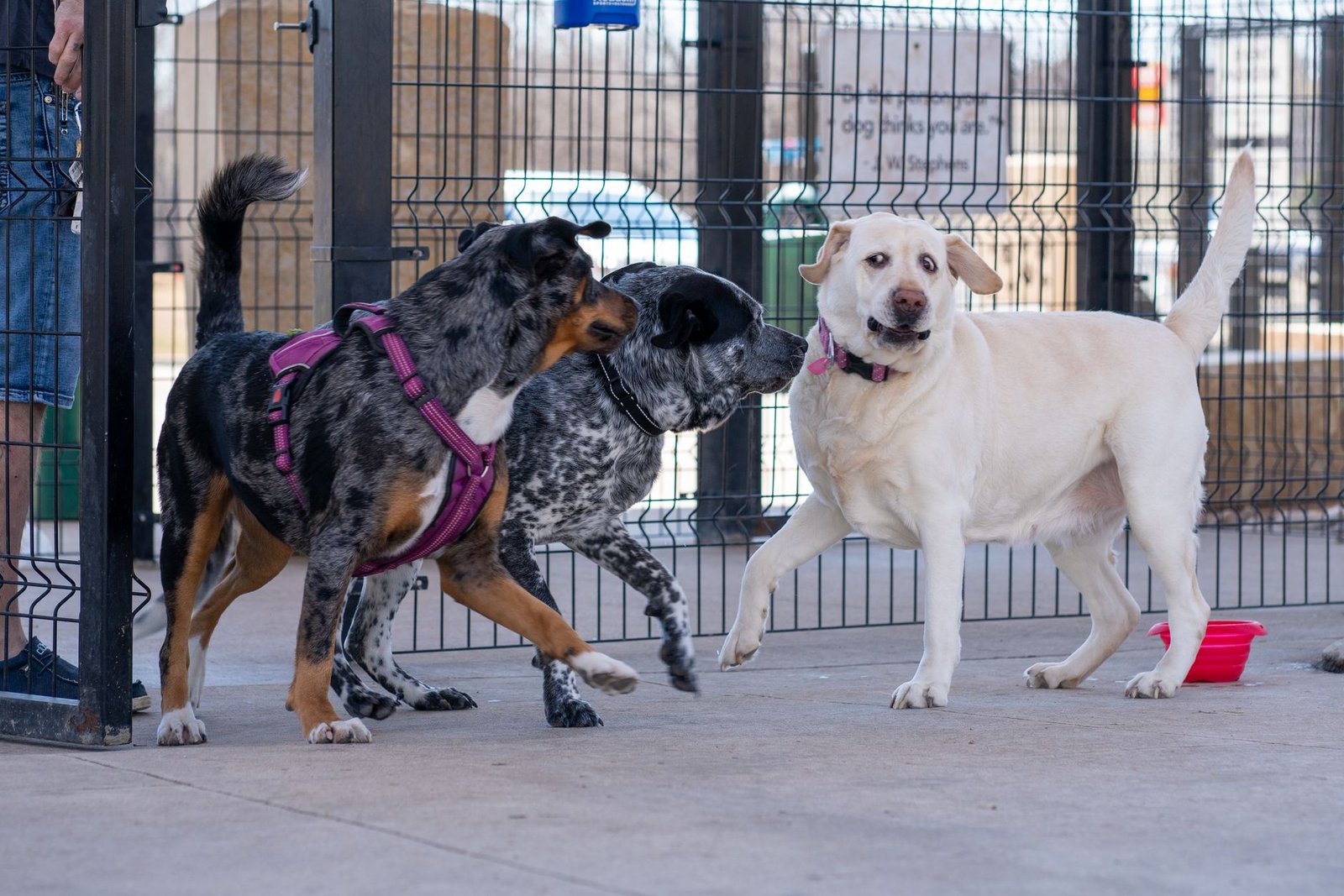
Socialization is the most misunderstood job of a puppy’s first few months. Owners picture meeting as many dogs as possible. What actually builds a confident adult is a smaller number of carefully managed experiences, arranged before a window that closes earlier than most people are told, and that does not reopen later.
What the window is
There is a period early in a puppy’s life when the brain files new things as information rather than as threats. During it, a puppy who meets something unfamiliar and has a neutral or pleasant time generally files it as normal for life.
That period begins before you bring them home and starts closing around twelve weeks, tapering off rather than slamming shut. The practical consequence is uncomfortable: by the time many puppies have finished their vaccination course, the most valuable weeks have already gone.
That is not an argument for ignoring health advice. It is an argument for being deliberate during the weeks you have, rather than waiting and then trying to catch up at six months, when the same experience lands very differently.
Quality, not quantity
This is the part that gets lost. A puppy who meets forty dogs and is frightened by four of them has learned something unhelpful about dogs. A puppy who meets six calm, tolerant adult dogs and enjoys all six has learned something useful.
The test for every encounter is simple: did the puppy stay relaxed and curious? If they went still, backed away, tucked their tail or tried to leave, that experience worked against you rather than for you, no matter how friendly the other party was.
Let the puppy choose the distance and the pace. A puppy who approaches on their own terms is learning confidence. A puppy who is carried over and placed in front of something is learning that their opinion does not count.
What is worth arranging
- Surfaces. Grass, gravel, wet pavement, metal, a wobbly board, stairs. Easy to arrange and genuinely useful.
- Sounds, quietly. Traffic from a distance, a vacuum in the next room, rain on a window, recorded noises at low volume.
- Handling. Feet, ears, mouth, tail, being held still, being lifted. This one pays off at every visit for the rest of their life.
- People who look different from your household: hats, high-visibility jackets, beards, umbrellas, wheelchairs, children at a distance.
- A small number of calm adult dogs who are healthy, vaccinated and known to be tolerant. One good role model beats a crowd.
- Car rides that go somewhere pleasant, so the car does not only ever mean the clinic.
- Being alone, briefly, which is as much a part of socialization as anything social.
A sensible rule in an Abbotsford winter: carry them for the parts you are not sure about. A puppy in your arms at the edge of a busy sidewalk is being socialized without being on the ground.
What works against you
Dog parks are the common mistake. They are uncontrolled, and one rough encounter in the window can undo months of careful work. Leave them until your dog is an adult with a solid recall.
Flooding is the other one: putting a worried puppy into the middle of something and waiting for them to settle. A puppy who cannot leave does not learn that the thing is fine; they learn that they could not get away.
And do not force greetings with people. A puppy who is allowed to approach a stranger in their own time becomes a dog who likes strangers. One who is held while people reach over them often does not.
The health side, briefly
Your puppy’s vaccination status does set some boundaries during these weeks, and where you can safely take them depends on where they are in the course. That is a conversation to have with us at the first visit rather than to guess at, because the answer differs by puppy and by location.
Our medical services cover those early visits and the schedule, and that appointment is the right moment to ask what is reasonable this week rather than next month. Our nutrition counseling covers the other half of growing a puppy well, which matters more in large breeds than most owners expect. If you are considering daycare or boarding later on, our pet care services are worth asking about early. Dental care is worth raising too, because handling the mouth now is what makes it possible later.
Our hours
We are open Monday to Friday from 8:00 am to 8:00 pm and Saturday and Sunday from 9:00 am to 5:00 pm, so a first puppy visit can usually be arranged within a few days.
Socialization questions are an ordinary appointment. A puppy who is vomiting repeatedly, has watery stool, will not eat, or has become quiet and floppy should be seen the same day, because young puppies deteriorate faster than adult dogs. If that happens when we are closed, go to an open emergency hospital rather than waiting for us to open.
Common questions
My puppy is already five months old. Have I missed it?
The most valuable weeks, yes. That does not mean nothing can be done; it means progress is slower and more deliberate, and it is worth getting help rather than hoping.
How many new things a day?
One or two done well beats a list. A puppy who is tired, overwhelmed or over-handled stops learning anything useful.
What if my puppy is frightened of something?
Increase the distance until they are comfortable again and work from there. Never push them closer to prove it is safe.
Do kittens have a window too?
They do, and it is earlier and shorter, largely over by around eight weeks. Handling, carriers and household noise are the priorities.
Are puppy classes worth it?
A well-run one is among the best things you can do, because the dogs are matched and supervised. An unmanaged free-for-all is not the same thing at all.
Speak to the team at Gladys Pet Hospital and Urgent Care
Pick two things from the list above and arrange them this week. If your puppy is already worried about something, raise it now rather than waiting to see whether they grow out of it.
Published by the team at Gladys Pet Hospital and Urgent Care.
This article is for general educational purposes only and is not a substitute for an in-person veterinary examination or advice about your individual pet. If you have an urgent concern about your pet, contact Gladys Pet Hospital and Urgent Care or your nearest emergency veterinary hospital right away.
Gladys Pet Hospital and Urgent Care
2630 Gladys Avenue, Abbotsford, BC V2S 3X7
Phone: (604) 850-2000
Hours: Monday to Friday 8:00 am to 8:00 pm; Saturday and Sunday 9:00 am to 5:00 pm